5456 aluminum is often specified for demanding service environments, yet production and field failures still occur when its behavior is misunderstood. Why do welded structures show premature cracking? Why does corrosion resistance vary between similar components? Why do parts that meet mechanical specifications fail after prolonged service? These issues usually originate from how the alloy behaves during manufacturing and in real operating conditions.
According to aluminum alloy standards and corrosion studies referenced by industry authorities such as ASM and marine material guidelines 5456 aluminum exhibits strong resistance to seawater corrosion but is sensitive to stress, temperature, and welding practice. Its magnesium-rich composition improves strength but introduces risks that must be managed throughout production and service life.
Understanding the critical behavior of 5456 aluminum is essential for correct application. When manufacturing processes and service conditions remain within its defined limits, performance is reliable. When those limits are exceeded, failure mechanisms accelerate and corrective options become limited.
Material Positioning and Production Behavior of 5456 Aluminum
Alloy Classification and Intended Use
5456 aluminum is classified within the 5xxx series as a high-magnesium aluminum alloy developed for structural applications exposed to aggressive environments. Its positioning is not as a general-purpose alloy, but as a material selected where strength, corrosion resistance, and weldability must coexist under service load. In production, this positioning directly influences how the alloy should be processed and where it should be applied.
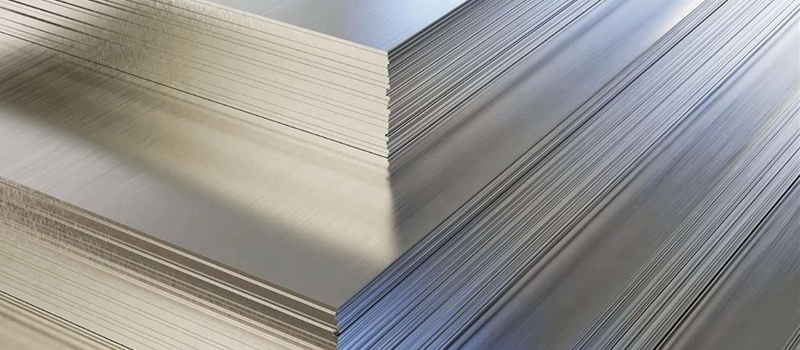
From a manufacturing perspective, 5456 aluminum is most commonly used in plate, sheet, and welded structural components rather than highly machined or formed parts. Its alloy design supports load-bearing use, but only when production methods respect its sensitivity to stress and temperature. Treating 5456 aluminum as interchangeable with lower-magnesium alloys often leads to inconsistent outcomes.
Magnesium Content and Its Production Implications
The defining characteristic of 5456 aluminum is its elevated magnesium content. This magnesium provides solid-solution strengthening, increasing yield and tensile strength without the need for heat treatment. In production, this allows components to retain strength after welding, which is a primary reason for its use in marine and structural assemblies.
However, magnesium also introduces production constraints. Higher magnesium content increases sensitivity to work hardening and residual stress accumulation. During forming, excessive cold work reduces ductility more rapidly than in lower-Mg alloys. In welding, improper heat input or restraint increases the likelihood of stress-related cracking. These effects must be managed deliberately throughout manufacturing.
Behavior During Forming and Fabrication
5456 aluminum exhibits moderate formability, but its usable forming window is narrower than that of softer 5xxx alloys. In production, bending, rolling, and shaping operations must be planned with controlled strain levels. Sharp bends, tight radii, or multi-stage cold forming increase the risk of surface cracking or localized failure.
Fabrication practices benefit from minimizing cold work before welding or final assembly. Where forming is required, process sequencing becomes critical. Excessive deformation early in production reduces tolerance for later operations. Stable fabrication depends on understanding how strain accumulates and how quickly ductility is consumed in this alloy.
Production Stability Versus Misapplication Risk
When used within its intended production envelope, 5456 aluminum delivers stable and predictable behavior. Strength retention after welding and resistance to general corrosion support long service life in demanding environments. Manufacturing processes that control strain, heat input, and joint design typically achieve consistent results.
Misapplication occurs when 5456 aluminum is pushed beyond its production limits. Over-forming, uncontrolled welding, or exposure to elevated temperatures introduce risks that are not immediately visible at inspection. In production environments, failures often emerge after assembly or during service, where corrective action is limited. Recognizing these boundaries early is essential to reliable use of the alloy.
Mechanical and Corrosion Behavior in Service
Strength Characteristics Under Service Load
5456 aluminum derives its strength primarily from solid-solution strengthening provided by magnesium. In service, this allows components to maintain yield and tensile strength without relying on heat treatment. For welded structures, this is a practical advantage, as mechanical properties remain relatively uniform across base material and heat-affected zones when welding is properly controlled.
However, service strength is closely tied to how the material was processed during production. Residual stress introduced through forming, welding restraint, or improper sequencing can reduce effective load capacity. In service environments with constant or cyclic loading, these stresses accelerate crack initiation even when nominal strength requirements are met.
Corrosion Resistance in Marine and Industrial Environments
5456 aluminum is widely used for its resistance to general corrosion, particularly in marine and salt-exposed environments. The high magnesium content contributes to the formation of a stable protective oxide layer, slowing uniform corrosion under normal exposure conditions.
This resistance is not universal. In stagnant seawater, crevice conditions, or areas with trapped moisture, localized corrosion can still develop. Surface condition, joint design, and drainage strongly influence service behavior. In production, poor surface preparation or trapped contaminants often determine whether corrosion resistance performs as expected in the field.
Stress Corrosion Sensitivity and Temperature Effects
One of the defining service limits of 5456 aluminum is its sensitivity to stress corrosion cracking under certain conditions. Sustained tensile stress combined with elevated temperature increases risk, particularly above moderate service temperatures. This behavior does not typically appear during initial inspection but develops over time in service.
From a manufacturing standpoint, this makes temperature exposure and stress management critical. Components intended for prolonged service at elevated temperature or under constant load require careful evaluation. When these conditions cannot be avoided, alternative alloys with lower stress corrosion sensitivity may provide more reliable performance.
Service Life Dependence on Production Discipline
The long-term performance of 5456 aluminum depends less on its nominal properties and more on how well production variables are controlled. Weld quality, residual stress distribution, surface condition, and joint geometry all influence service behavior.
Inconsistent production practices often lead to premature service failures that are incorrectly attributed to material quality. In reality, service behavior reflects the cumulative effect of manufacturing decisions. For 5456 aluminum, disciplined production is a prerequisite for reliable service life rather than an optional refinement.
Welding Behavior and Heat Input Control
Weldability Characteristics of 5456 Aluminum
5456 aluminum is generally considered weldable, but its weldability is conditional rather than forgiving. The alloy retains much of its strength after welding because it is not heat-treatable, which is a practical advantage in structural fabrication. This makes it suitable for large welded assemblies where post-weld heat treatment is not feasible.
However, weldability depends heavily on process control. High magnesium content increases sensitivity to hot cracking and porosity if welding parameters are poorly managed. In production, weld quality varies significantly with joint design, cleanliness, and filler selection, making standardized procedures essential.
Heat Input, Restraint, and Residual Stress
Heat input during welding has a direct impact on the long-term performance of 5456 aluminum. Excessive heat widens the heat-affected zone and increases residual stress, while insufficient heat compromises fusion and joint integrity. Both conditions reduce reliability in service.
Restraint during welding is equally critical. Highly restrained joints prevent stress relaxation during cooling, increasing tensile residual stress in the weld and adjacent material. In service, these stresses contribute to crack initiation and accelerate stress corrosion mechanisms. Managing restraint through fixture design and welding sequence is therefore a core production requirement.

Filler Material Selection and Joint Integrity
Filler material selection strongly influences weld performance in 5456 aluminum. Fillers with compatible magnesium content help maintain corrosion resistance and mechanical continuity across the joint. Incompatible fillers can create galvanic imbalance or reduce joint ductility, even when weld appearance is acceptable.
In manufacturing, filler choice should be validated against service environment and load conditions, not selected solely on availability or cost. Joint integrity in 5456 aluminum assemblies depends on chemical compatibility as much as on welding technique.
Post-Weld Condition and Service Implications
After welding, 5456 aluminum does not benefit from strength recovery through heat treatment. The post-weld condition therefore reflects the final mechanical and corrosion behavior of the joint. Surface condition, weld profile, and residual stress distribution become permanent features of the component.
In service, failures often initiate at or near welds due to combined effects of stress, environment, and microstructural change. From a production standpoint, this reinforces the need to treat welding as a defining step rather than a secondary operation. For 5456 aluminum, weld quality largely determines service reliability.
Forming, Machining, and Production Limits
Forming Behavior and Strain Accumulation
5456 aluminum allows limited forming, but its tolerance for accumulated strain is lower than that of softer 5xxx alloys. Cold forming operations such as bending or rolling increase work hardening rapidly, reducing remaining ductility. In production, this narrows the safe forming window and increases sensitivity to bend radius, tooling alignment, and process sequencing.
When forming is required, strain should be distributed evenly and kept within conservative limits. Multi-stage forming without intermediate stress relief significantly increases crack risk. Manufacturing stability depends on recognizing that 5456 aluminum is not intended for aggressive shape change.
Machining Characteristics and Dimensional Control
Machining 5456 aluminum is generally stable, but dimensional control can be affected by residual stress and material movement after material removal. Compared with cast alloys, tool wear is less severe, but part distortion can occur when machining thin sections or asymmetric geometries.
In production, balanced material removal and proper fixturing are essential. Machining sequences that release residual stress late in the process often result in dimensional drift. For precision components, machining strategy must account for stress redistribution rather than relying solely on nominal tolerances.
Temperature Sensitivity During Production
Although 5456 aluminum is not heat-treatable, it remains sensitive to temperature during production. Elevated temperatures accelerate stress corrosion susceptibility and reduce allowable service margins. Localized heating during cutting, straightening, or corrective rework introduces risk that may not be immediately visible.
Manufacturing processes should therefore minimize unnecessary heat exposure and avoid thermal correction methods commonly used with other aluminum alloys. For 5456 aluminum, temperature control is a production requirement rather than a secondary consideration.
Production Limits and Practical Boundaries
The production limits of 5456 aluminum are defined by its response to strain, stress, and temperature rather than by strength alone. Exceeding these limits rarely causes immediate failure, but it reduces long-term reliability and accelerates service degradation.
In manufacturing environments, respecting these boundaries leads to predictable behavior and consistent output. Ignoring them shifts risk downstream, where detection and correction are costly or impossible. Understanding these limits is essential to using 5456 aluminum effectively in production and service.
Application Boundaries and When to Avoid 5456 Aluminum
Applications Where 5456 Aluminum Performs Reliably
5456 aluminum performs reliably in applications where structural loading is well defined, corrosion resistance is critical, and service temperature remains controlled. Typical uses include marine structures, ship components, pressure housings, and welded panels exposed to saltwater or humid industrial environments.
In these applications, success depends on conservative design, controlled welding procedures, and limited post-fabrication deformation. When production discipline is maintained, 5456 aluminum delivers stable mechanical performance and predictable corrosion resistance over long service periods.
Applications That Increase Failure Risk
Failure risk increases when 5456 aluminum is used in applications involving sustained tensile stress, elevated temperature, or complex forming. Components subjected to constant load combined with moderate heat exposure are particularly vulnerable to stress corrosion mechanisms that develop gradually in service.
Highly constrained assemblies, thick-to-thin transitions, and designs with sharp stress concentrators further increase risk. In these cases, initial inspection may show no defects, but service degradation accelerates once the component is in operation.
Situations Where Alternative Alloys Are More Appropriate
5456 aluminum should be avoided when applications require high formability, aggressive machining, or tolerance for elevated temperature exposure. Alloys with lower magnesium content or different strengthening mechanisms provide more forgiving behavior in these conditions.
From a manufacturing perspective, selecting an alternative alloy often reduces production risk more effectively than attempting to control 5456 aluminum beyond its intended limits. Material substitution is frequently a more reliable solution than process correction when application requirements fall outside the alloy’s stable envelope.
Inspection, Quality Control, and Field Feedback
Production Inspection Challenges
Inspection of 5456 aluminum components requires attention to stress state rather than surface appearance alone. Many service-related failures originate from residual stress, weld restraint, or microstructural sensitivity that cannot be detected through basic visual inspection.
In production, dimensional inspection may confirm geometry while masking underlying risk. Components can meet drawing requirements yet carry tensile stress that later contributes to cracking or corrosion-related degradation. This disconnect often leads to false confidence at release.
Effective inspection strategies therefore combine dimensional checks with process verification. Welding parameters, forming strain limits, and thermal exposure history are often more predictive of service behavior than final measurements alone.
Non-Destructive Testing Limitations
Standard non-destructive testing methods have limited ability to predict long-term service behavior of 5456 aluminum. Surface-based techniques may identify gross defects but do not reliably indicate susceptibility to stress corrosion or delayed cracking.
Radiographic and ultrasonic inspection can detect internal flaws, but they do not capture residual stress distribution or microstructural conditions introduced during welding and forming. As a result, components may pass inspection while still being vulnerable under service load.
From a manufacturing standpoint, this reinforces the importance of upstream control. Inspection should be treated as a confirmation step, not a substitute for disciplined production.
Role of Field Feedback in Material Control
Field performance data plays a critical role in refining the use of 5456 aluminum. Many of its limitations only become apparent after prolonged exposure to real service conditions, particularly in marine or industrial environments.
Manufacturers that track field feedback often adjust welding procedures, design margins, or application boundaries based on observed behavior. These adjustments reduce recurrence of failure modes that are not obvious during initial qualification.
In practice, stable use of 5456 aluminum depends on a feedback loop between production and service. When field data is ignored, the same failure mechanisms tend to repeat across projects.
Conclusion
5456 aluminum is defined by critical behavior that links production decisions directly to service performance. Its strength and corrosion resistance are reliable only when strain, stress, welding, and temperature remain within controlled limits. In manufacturing and service, disciplined application determines whether the alloy performs predictably or becomes a source of long-term failure.